



THE EVOLUTION OF SMART CONNECTED SYSTEMS
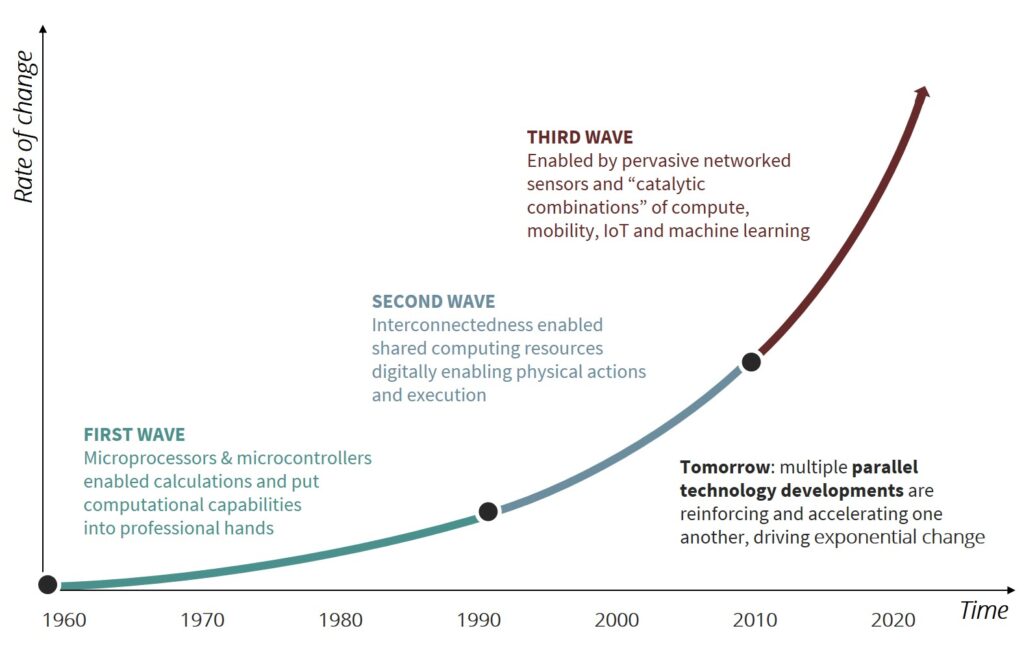
Since the beginning of computing there have essentially been three waves of technology innovations. The first wave in the 1960s to the 1980s was driven by the advent of silicon – micro-processors, and microcontrollers that enabled calculations and put computational capabilities into business, society, and professionals’ hands on a significant scale. Engineers could design products; businesses could manage orders and inventories; and scientists could model diverse realms like human disease, the weather, and natural resources.
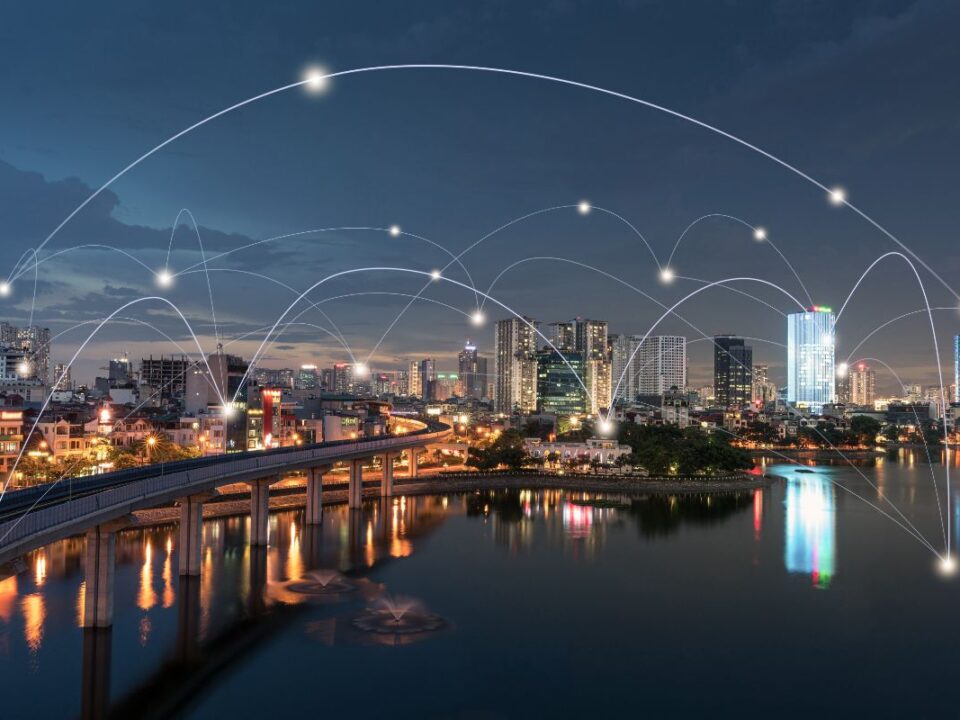
The second wave in the 1990s and 2000s, brought us interconnectedness or the “connected economy.” Everything was linked and integrated creating a new virtual world where the Internet, telco networks, and satellites enabled shared computing resources, interconnecting machines, software, systems, processes, and people. This shift enabled digitally triggered real-world actions and execution.
The third wave of innovation, which is still evolving, is enabled by cheap pervasive networked sensors and data fusion. This is driving new innovations and enabling a whole new generation of “awareness” applications. As networks continue to invade the physical world, system developers are seeing the value that comes from the growing interactions between sensors, machines, systems, and people, and the ability to detect patterns from large-scale sensor and machine data.